
––––––––––––––––
06 — ARTISTIC DEVELOPMENT
–––––––––––––––––––––––––
6.1 — ARTISTIC PRACTICE
INVESTIGATION THROUGH MAKING
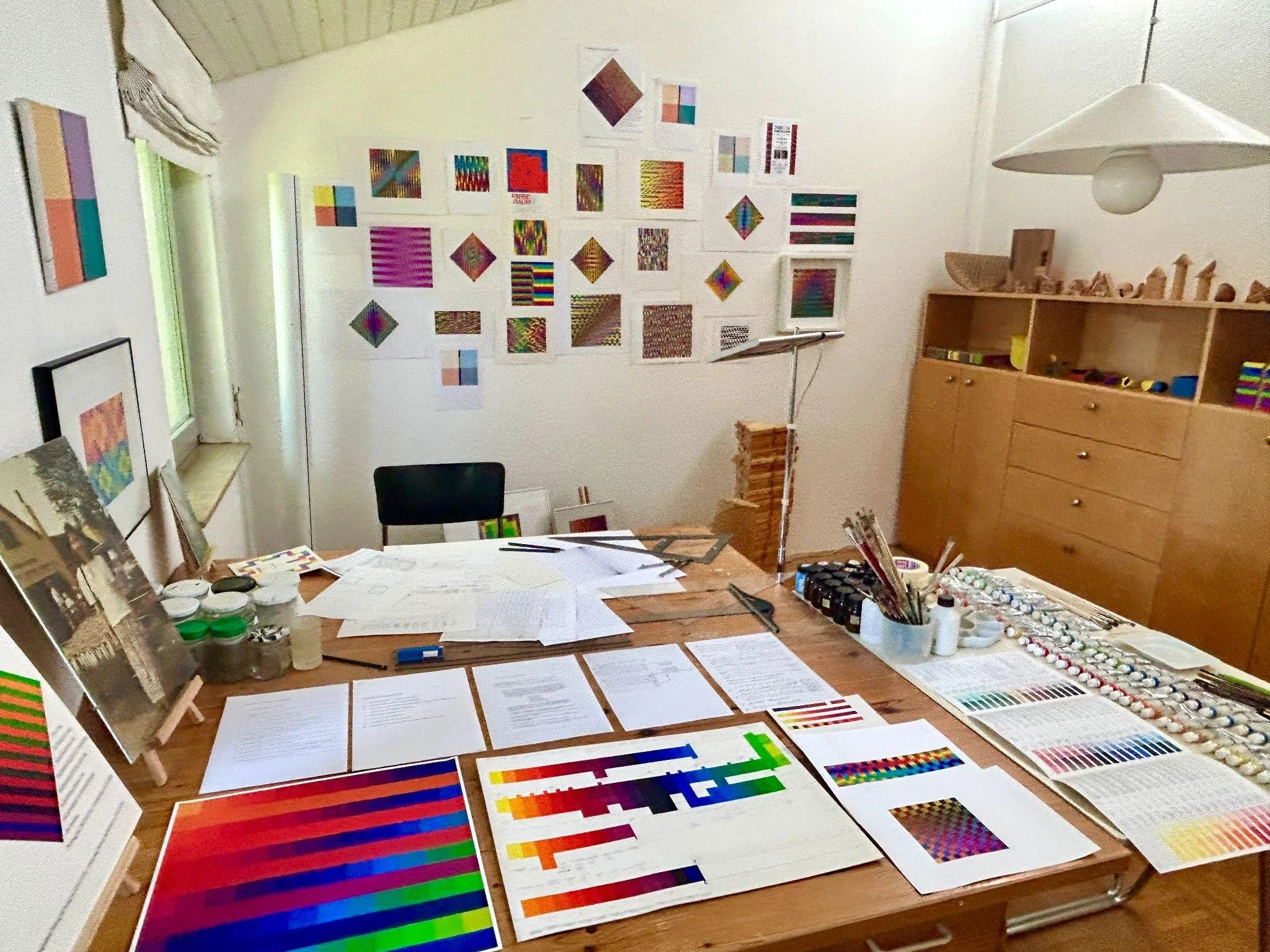
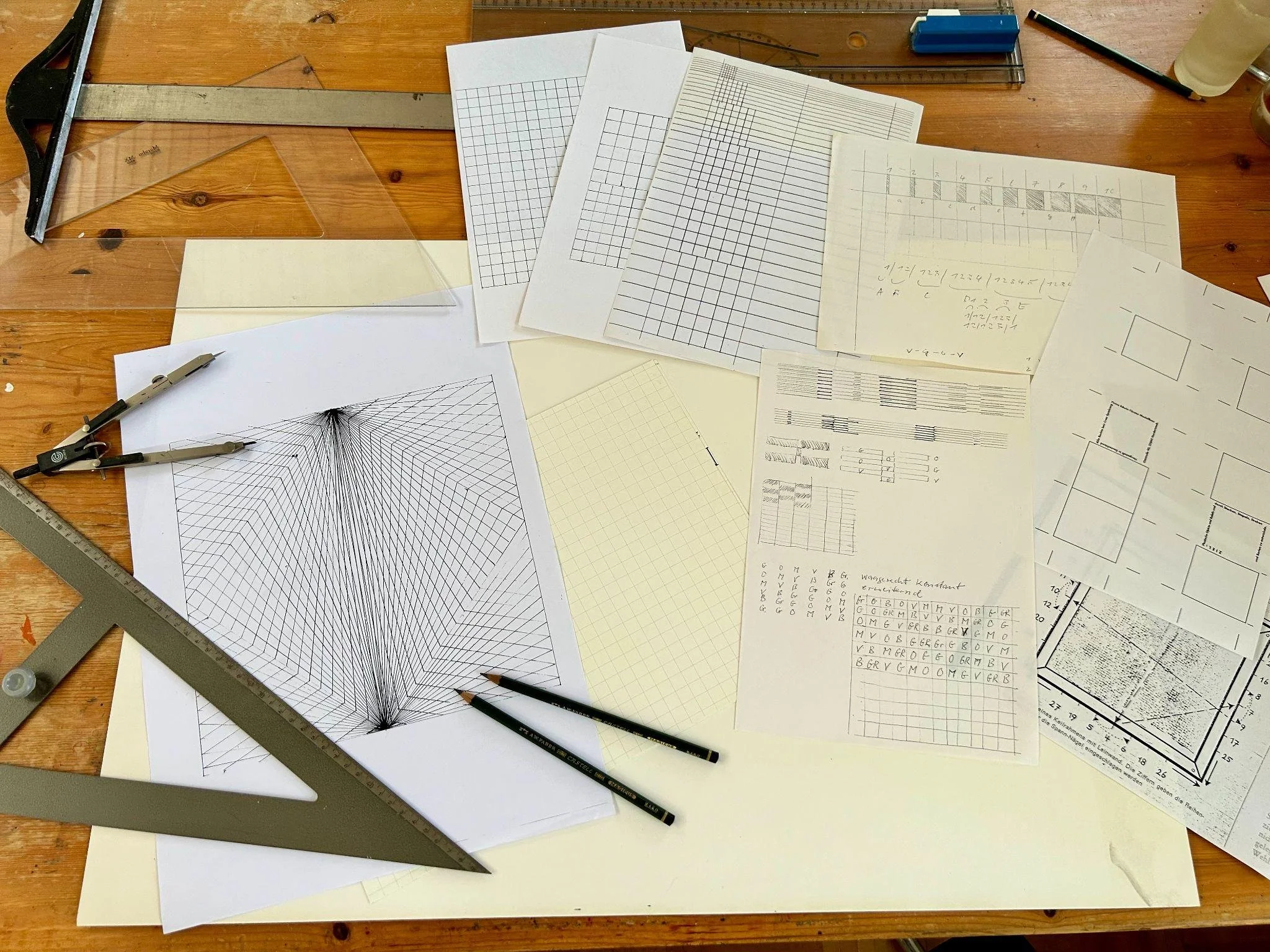
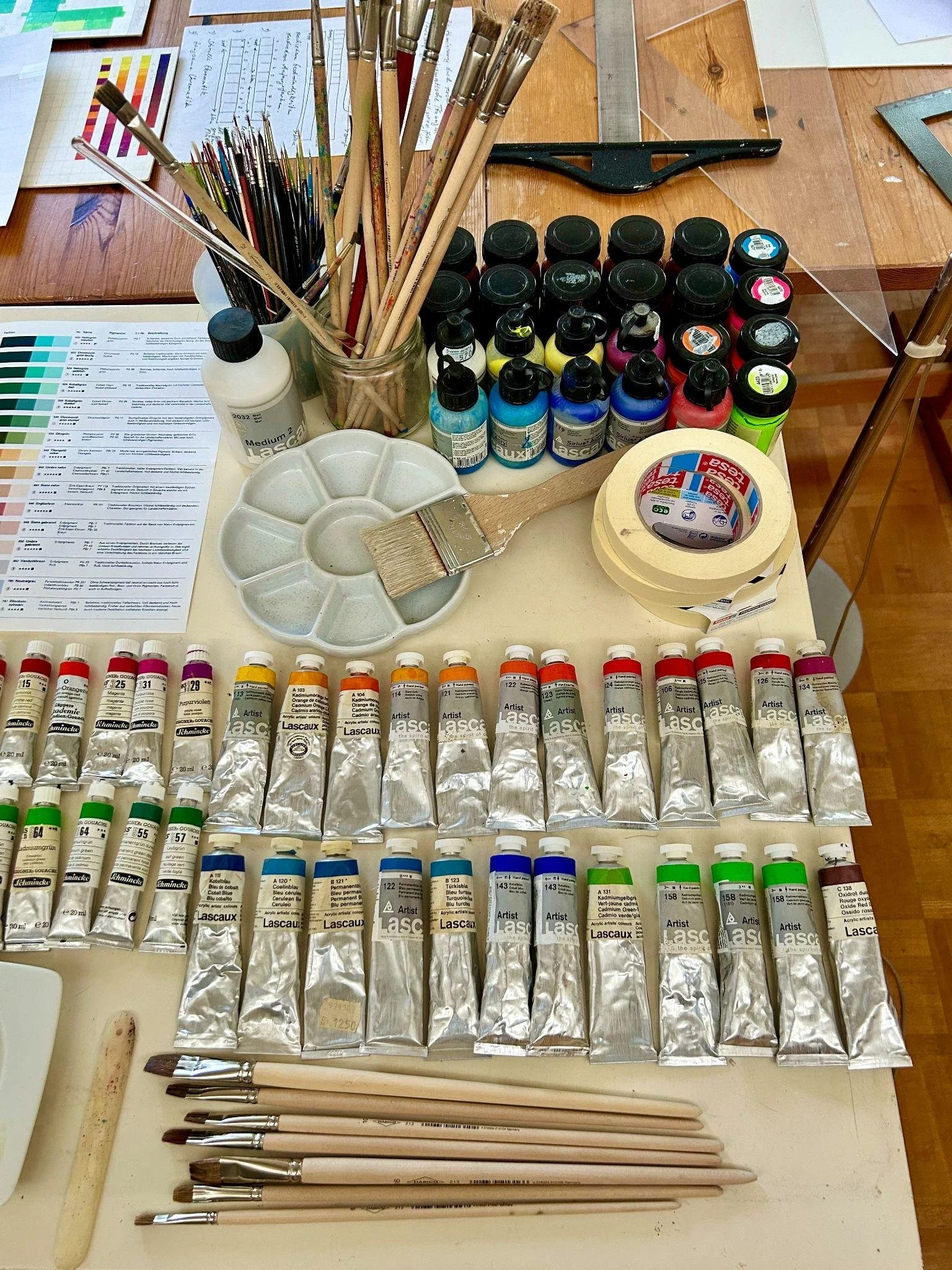
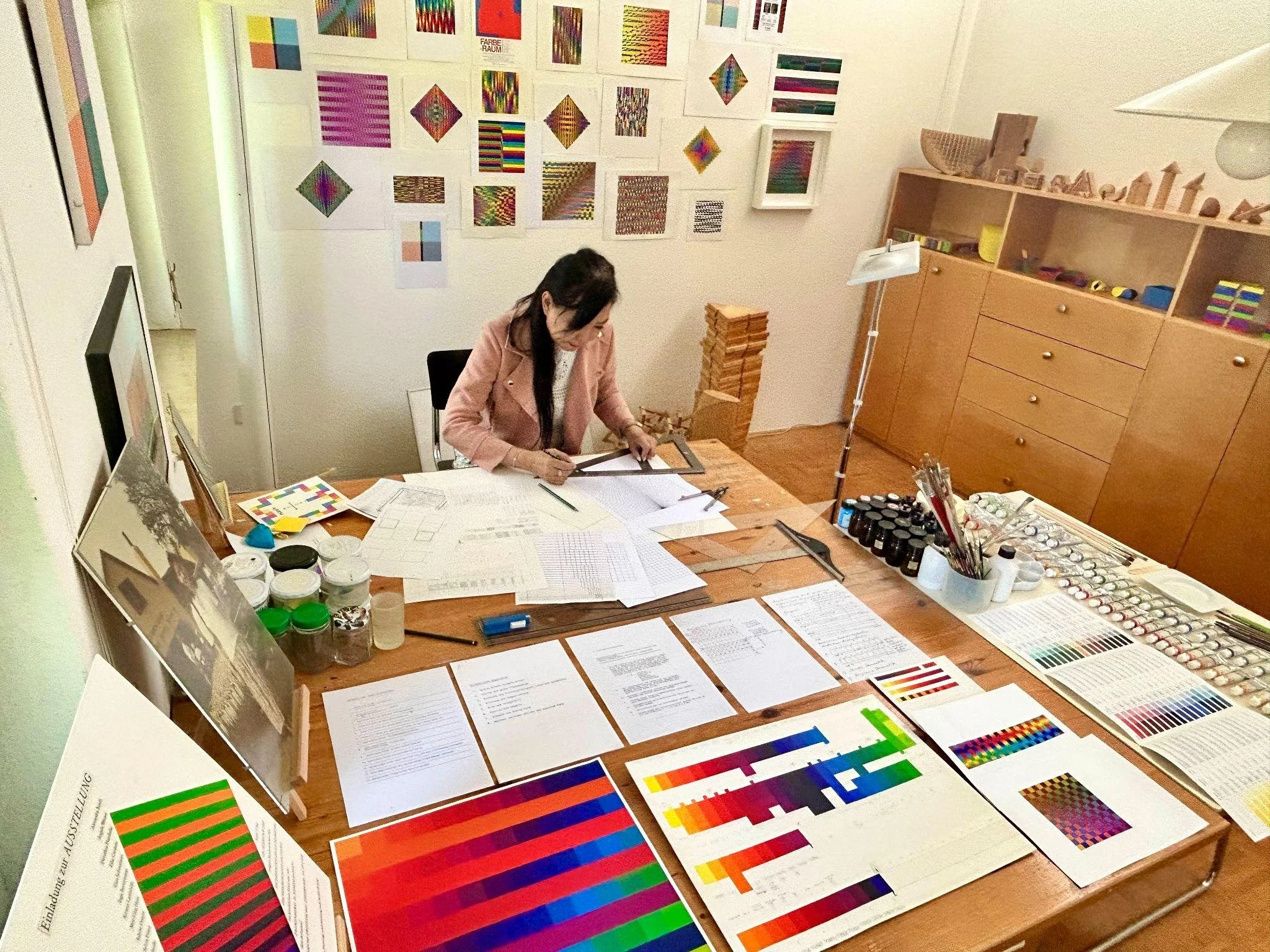
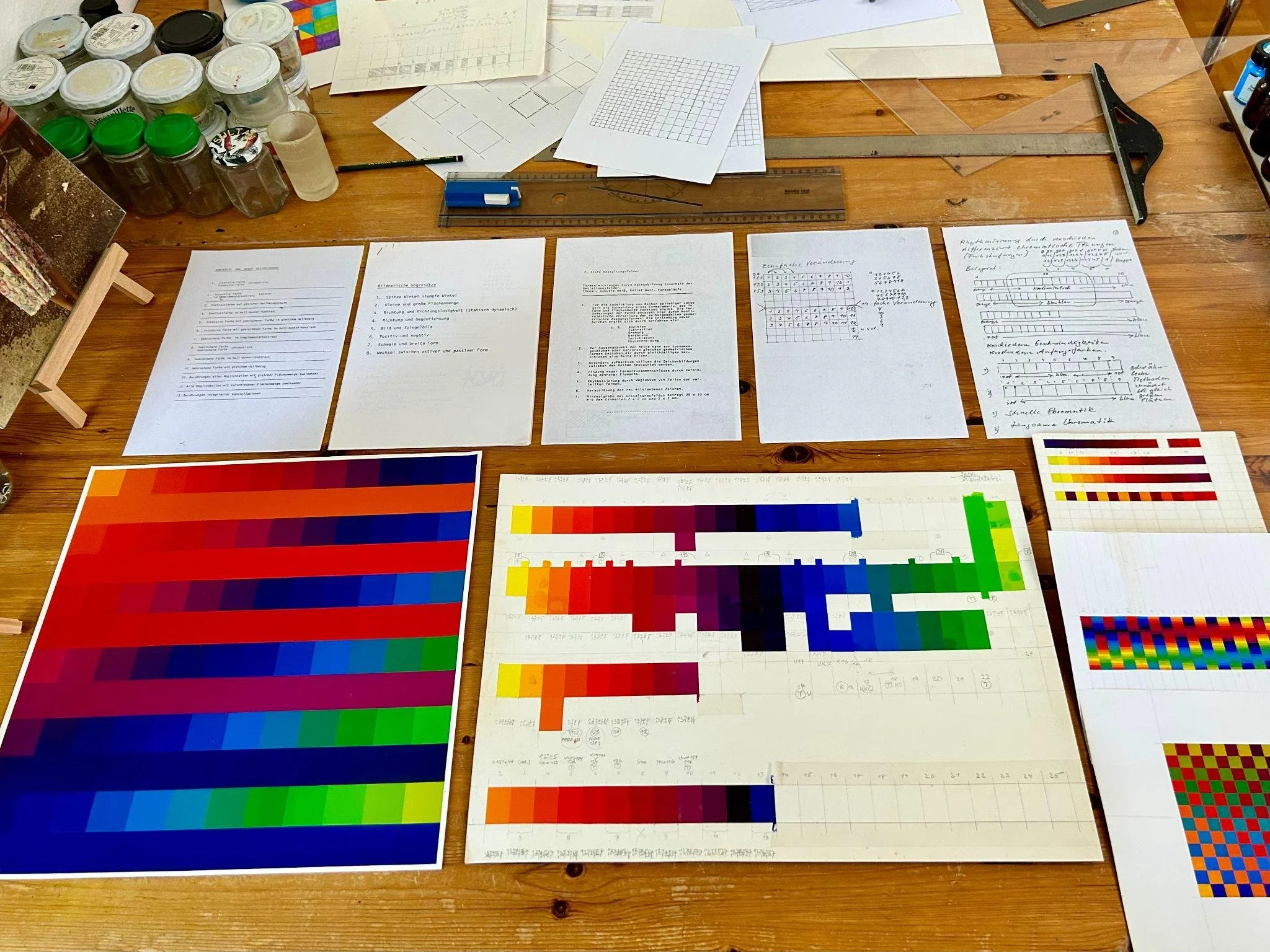
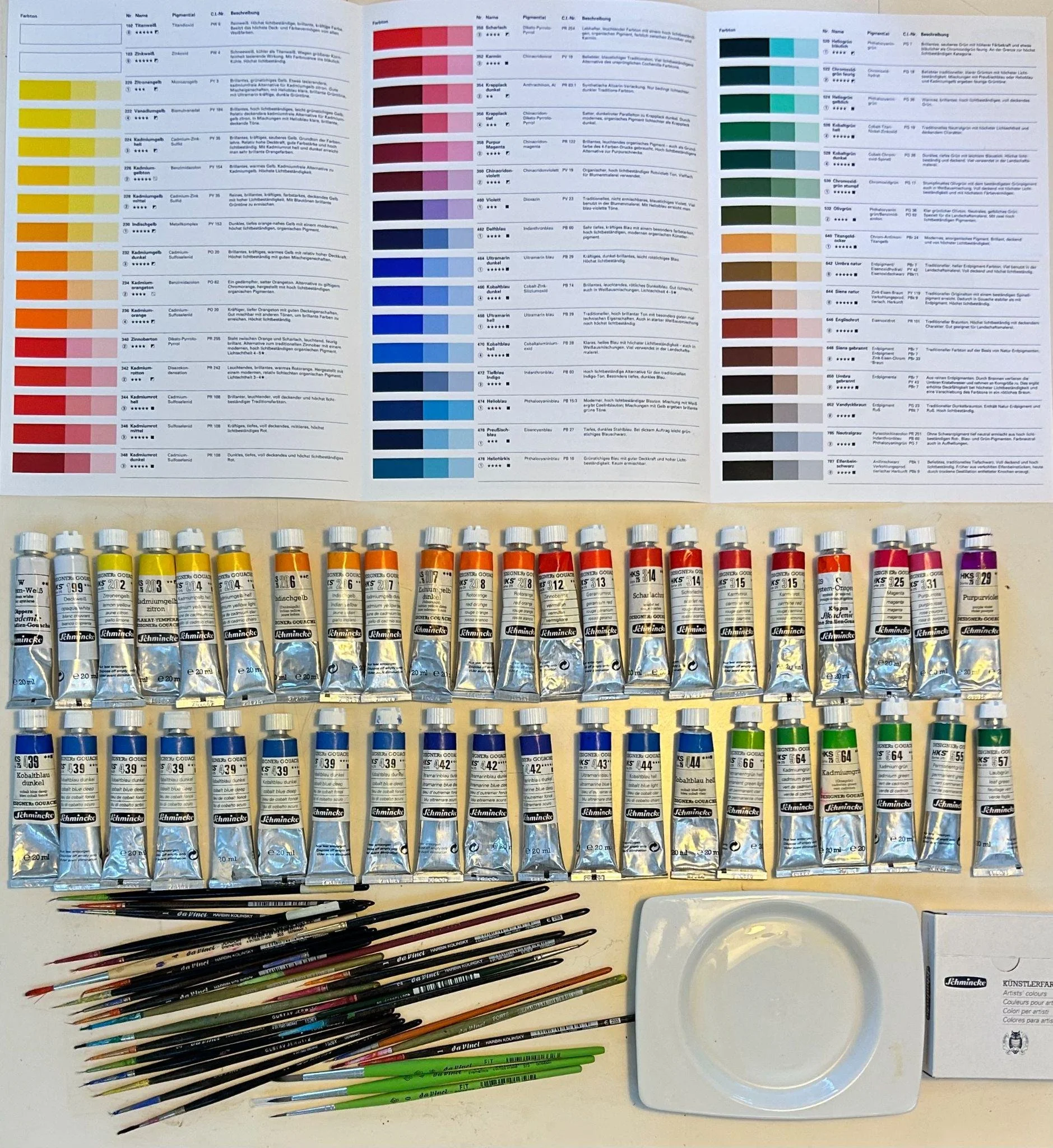
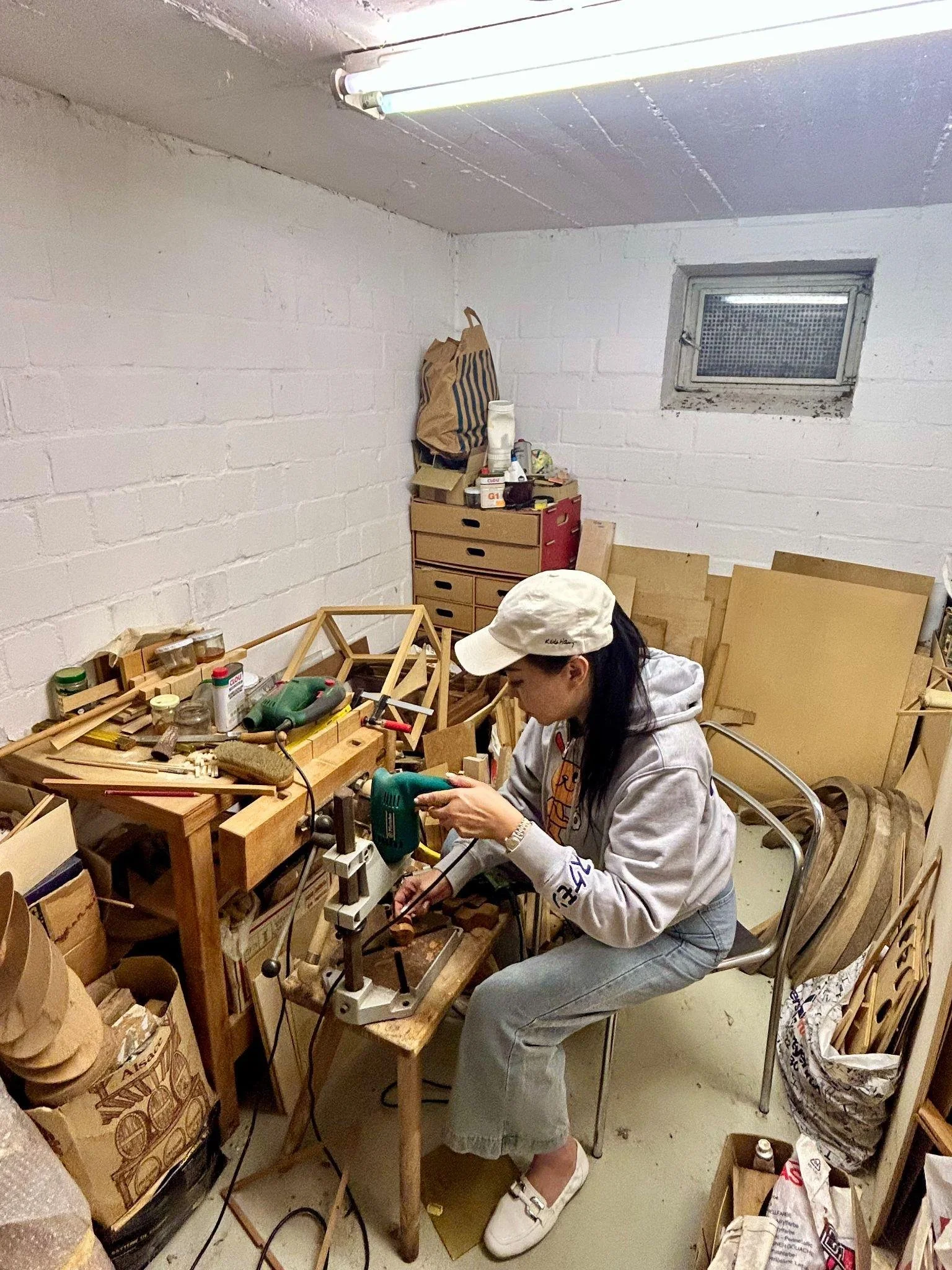
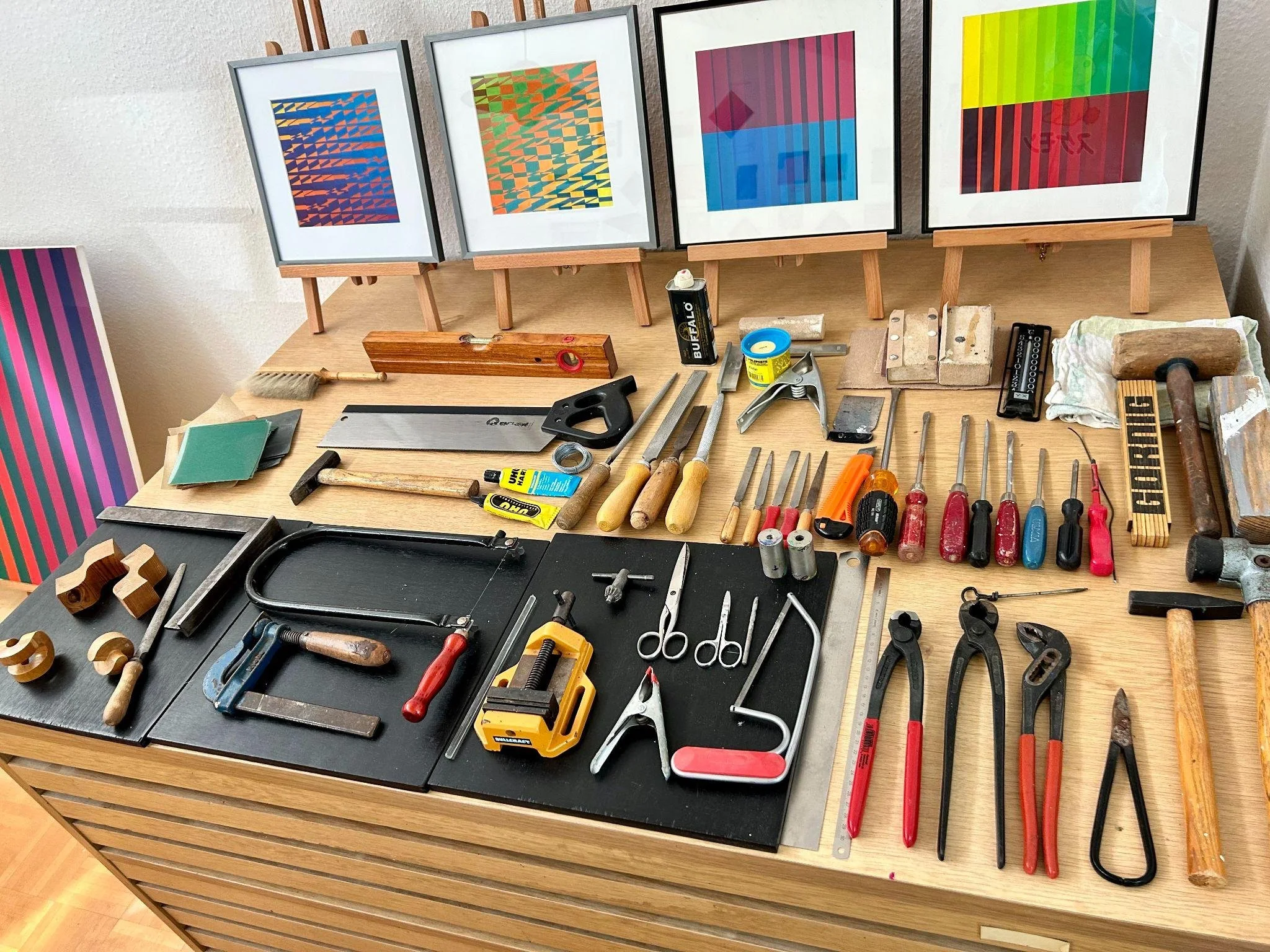
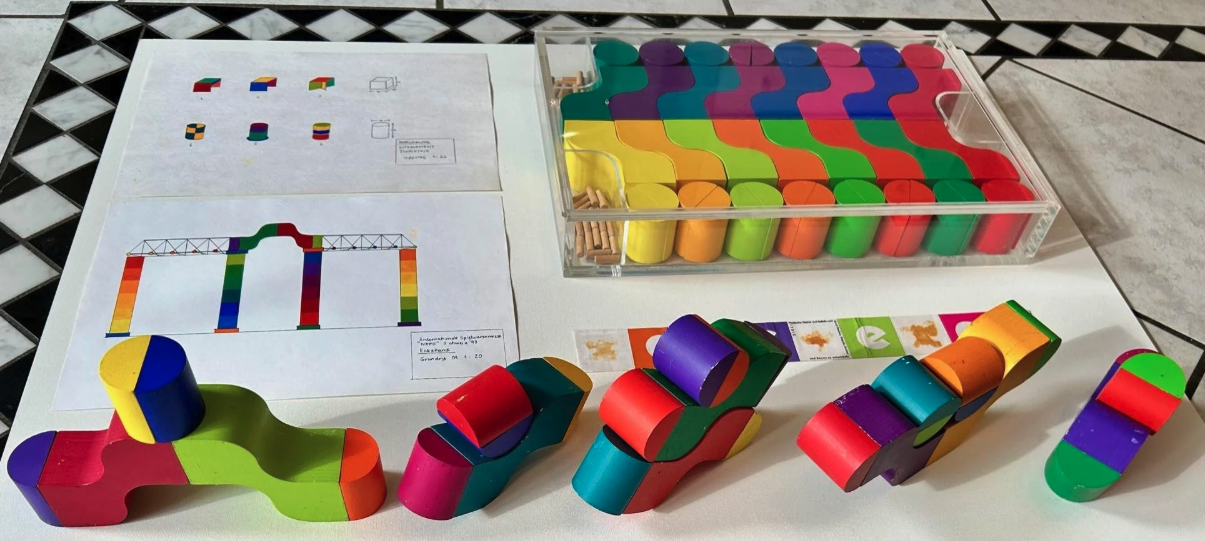
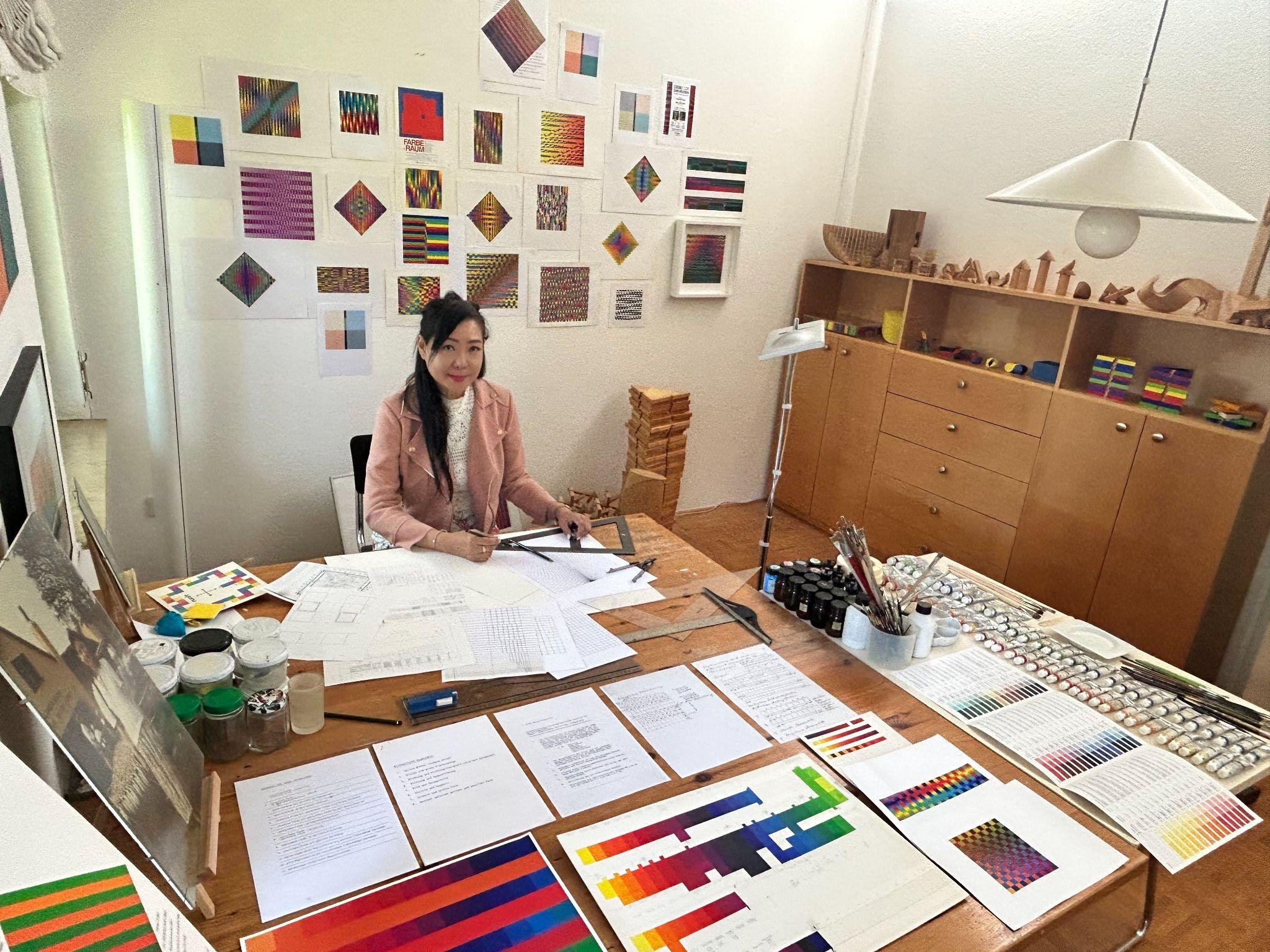
My practice explores colour, form, geometry, material and space through painting, drawing, colour studies, three-dimensional work and material experimentation.
I develop questions through making. Colour, form and material are repeatedly tested, observed and revised, allowing unexpected relationships and transformations to emerge.
This process has led to my continuing interest in how colour and form influence perception and experience.
RESEARCH CONNECTION
My proposed doctoral research extends this studio-based investigation into a focused exploration of colour, form, perception, experience and transformation.
VISUAL EVIDENCE
––––––––––––––––––––––––––––––––
6.2 — COMMUNICATION DESIGN
STRUCTURED VISUAL THINKING
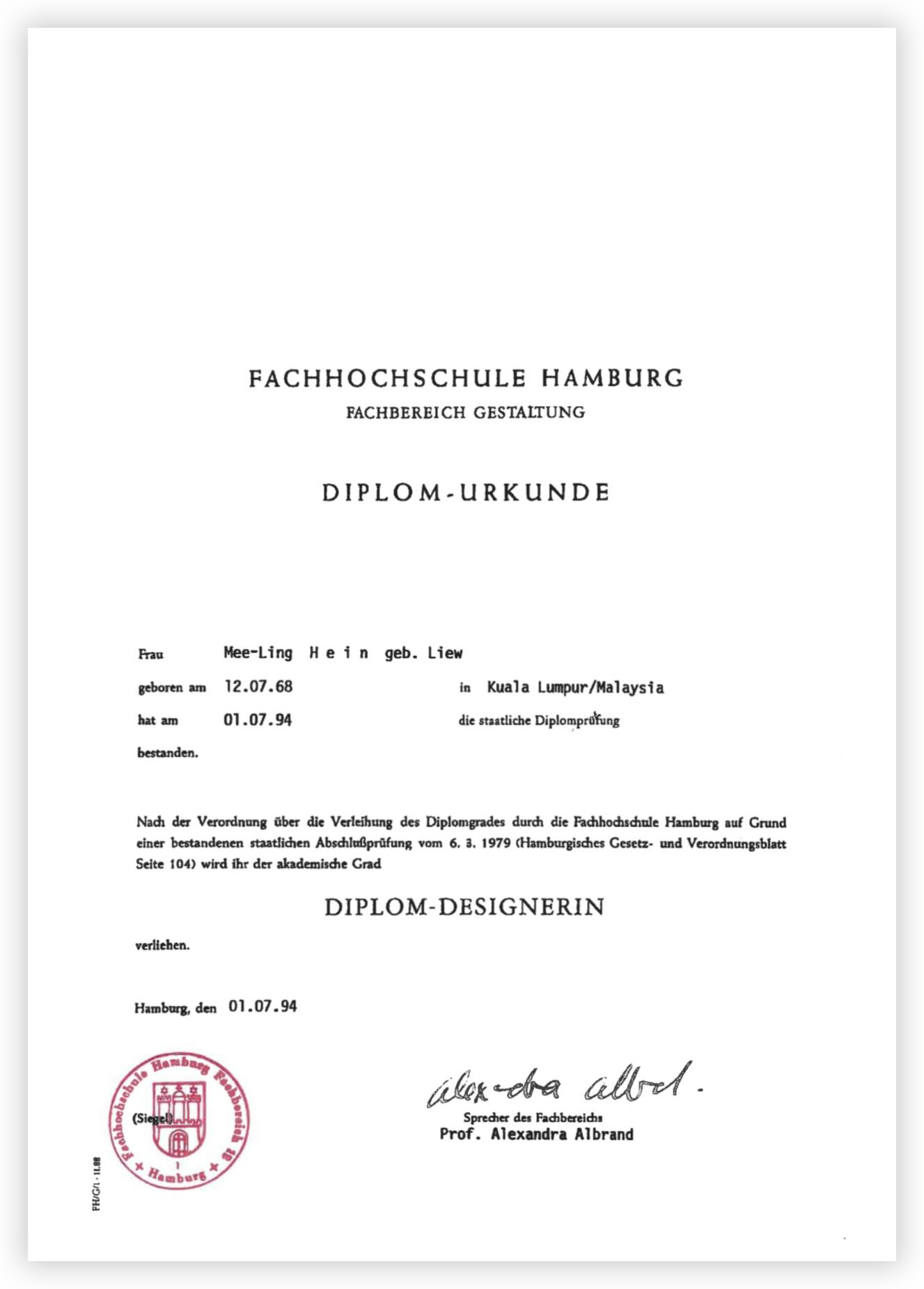
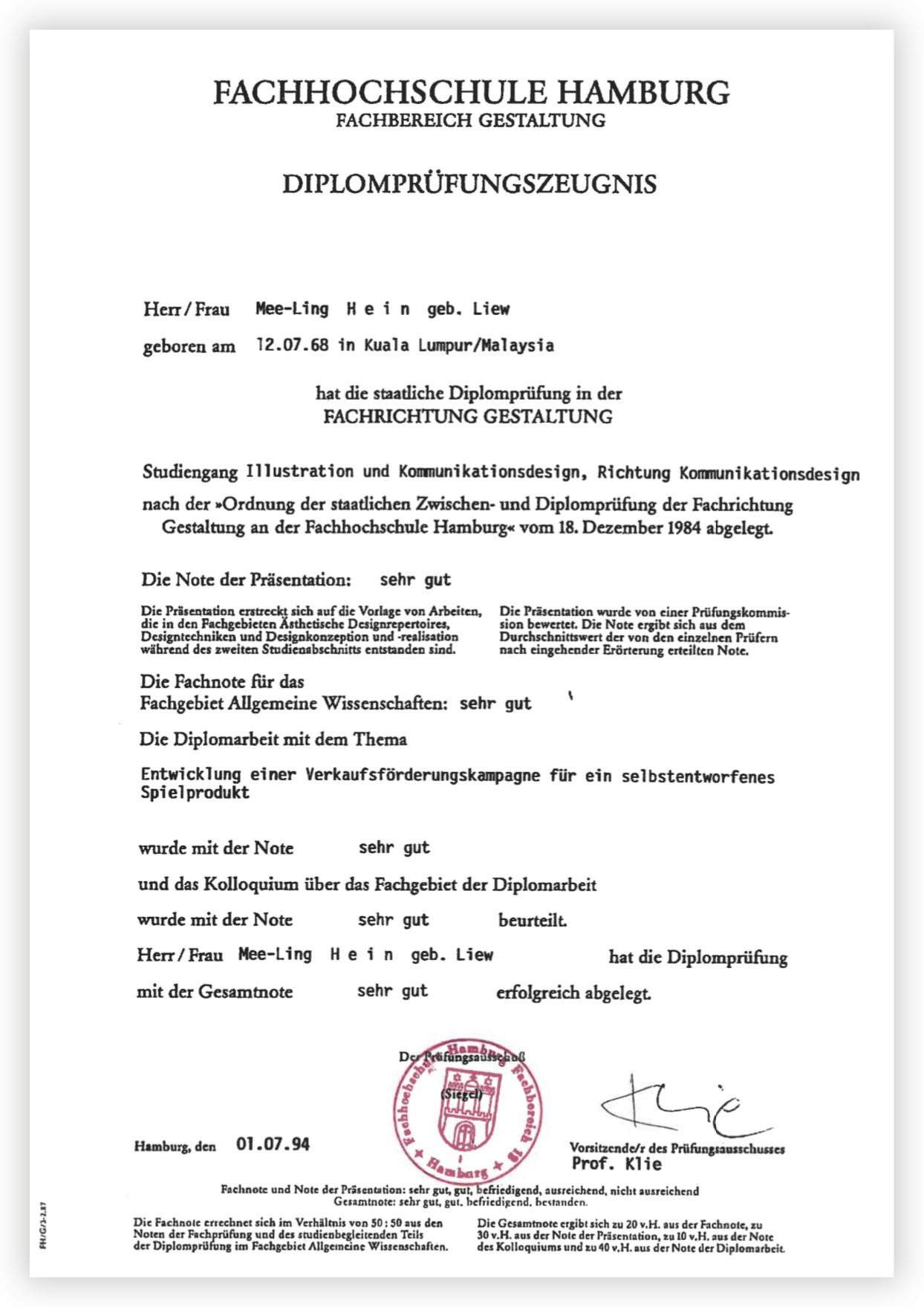
Diplom Designerin — Communication Design
Fachhochschule Hamburg
Final Grade: 1.0
My communication design education developed a strong foundation in colour, geometry, composition, typography, visual systems and communication.
It taught me to analyse relationships between visual elements and to consider how structure can influence perception, meaning and visual experience.
RESEARCH CONNECTION
This background continues to inform my artistic thinking, particularly my interest in colour, form, structure and visual relationships.
––––––––––––––––––––––––––––––––
6.3 — EDUCATION AND TEACHING
COMMUNICATION · OBSERVATION · EXCHANGE
Teaching and educational activities have strengthened my ability to communicate ideas, observe responses and learn through making, experimentation and participation.
In 2012, while volunteering at Kwalata Game Ranch, Hammanskraal, South Africa, I facilitated an art workshop involving creative activities and participant engagement.
This experience contributed to my understanding of artistic practice as a process of exchange, observation and shared learning.
Kwalata Game Ranch, Hammanskraal, Gauteng, South Africa — 2012
Volunteer · Art workshop · Creative learning · Artistic exchange
–––––––––––––––––––––––––––––––––––––––––
6.4 — COMMUNITY AND COLLABORATIVE PRACTICE
INITIATIVE · COLLABORATION · RESPONSIBILITY
My community work, including my role as founder of Save African Children, has developed my ability to initiate activities, communicate with others and work collaboratively across different social and cultural contexts.
Through the Golden Youth Club and Hope of Africa Church, I have supported art workshops for children, disabled people and underprivileged communities in Winterveldt and Pretoria, South Africa.
These experiences have deepened my understanding of participation, inclusion, responsibility and human connection.
RESEARCH CONNECTION
This experience has strengthened my interest in how artistic activity can create opportunities for participation, exchange and shared experience.
Community Art Workshops — Winterveldt & Pretoria, South Africa
Community Art Workshops — Winterveldt & Pretoria, South Africa
Art workshops for children and community members
● Support for disabled and underprivileged participants
● Collaboration with Golden Youth Club and Hope of Africa Church
● Photographic documentation of community activities
SPECIAL APTITUDE FOR ARTISTIC–RESEARCH WORK
My artistic development has grown through sustained engagement with artistic practice, communication design, education, professional work, community practice and cross-cultural experience.
These experiences have shaped the way I observe, make, experiment, communicate and reflect.
My artistic practice provides the foundation for my proposed doctoral research, Transformative Colour–Form Methodology (TCFM), which investigates relationships between colour, form, perception, experience and transformation.
The doctoral project brings these strands together through a more focused process of making, observation, experimentation and reflection.
Uganda
–––––––––––––––––––––––––––––––––––––––––
6.5 — CROSS-CULTURAL EXPERIENCE
CONTEXT · ENCOUNTER · LIVED EXPERIENCE
My experiences across Uganda, Malaysia and Germany have contributed to my understanding of different relationships to place, identity, memory, communication and human experience.
Moving between different cultural contexts has encouraged me to observe how meaning changes through encounter, context and lived experience.
These experiences continue to inform the perspective from which I approach my artistic practice and research.
Malaysia
Germany
–––––––––––––––––––––––––––––––––––––––––
6.6 — PROFESSIONAL EXPERIENCE
INDEPENDENCE · ADAPTABILITY · SUSTAINED PRACTICE
My professional experience across communication design, artistic practice and education has involved developing ideas, working independently, solving practical problems and carrying projects through different stages.
This experience has strengthened my independence, adaptability, organisation and responsibility.
These qualities support my approach to a long-term artistic research process in which questions develop through practice, experimentation and reflection.
THE DEVELOPMENT OF MY PRACTICE
My artistic development has moved through several connected forms of learning and practice.
COMMUNICATION DESIGN
Visual discipline
Colour · Structure · Geometry · Composition
↓
ARTISTIC PRACTICE
Making and experimentation
Material · Form · Perception
↓
EDUCATION
Observation and exchange
Communication · Participation · Reflection
↓
CROSS-CULTURAL EXPERIENCE
Context and lived experience
Memory · Difference · Relationship
↓
COMMUNITY & PROFESSIONAL PRACTICE
Initiative and collaboration
Independence · Responsibility · Adaptability
↓
ARTISTIC–RESEARCH PRACTICE
MAKING → OBSERVATION → EXPERIMENTATION → REFLECTION → TRANSFORMATION
TCFM
TRANSFORMATIVE COLOUR–FORM METHODOLOGY
My proposed doctoral research brings these strands together through a focused investigation of:
COLOUR · FORM · PERCEPTION · EXPERIENCE · TRANSFORMATION
TCFM develops from my existing studio practice and proposes an iterative relationship between making, observation, experimentation and reflection.
It is intended as an evolving research framework through which artistic practice can generate questions, discoveries and new directions.
VISUAL EVIDENCE
1 conceptual diagram
The diagram should show:
Colour + Form
↓
Perception + Experience
↓
Making + Experimentation
↓
Observation + Reflection
↓
Transformation
MY POSITION AS A RESEARCHER
I approach doctoral research with experience accumulated through many years of artistic, professional, educational and community practice.
At the same time, I approach the PhD as a new phase of learning.
I bring curiosity, practical experience, patience and a willingness to question my own assumptions.
I do not want the research process simply to confirm what I already believe. I want artistic practice to remain a place where questions can develop, assumptions can be challenged and unexpected possibilities can emerge.
TCFM will therefore develop through the research process, allowing its concepts and methods to be tested, refined and transformed through practice.
CONCLUSION
My artistic development has brought together making, visual thinking, communication, observation, collaboration and reflection.
These experiences provide the foundation for my proposed doctoral investigation.
Through Transformative Colour–Form Methodology, I seek to develop a sustained artistic research process in which colour, form, perception, experience and transformation can be investigated through practice.